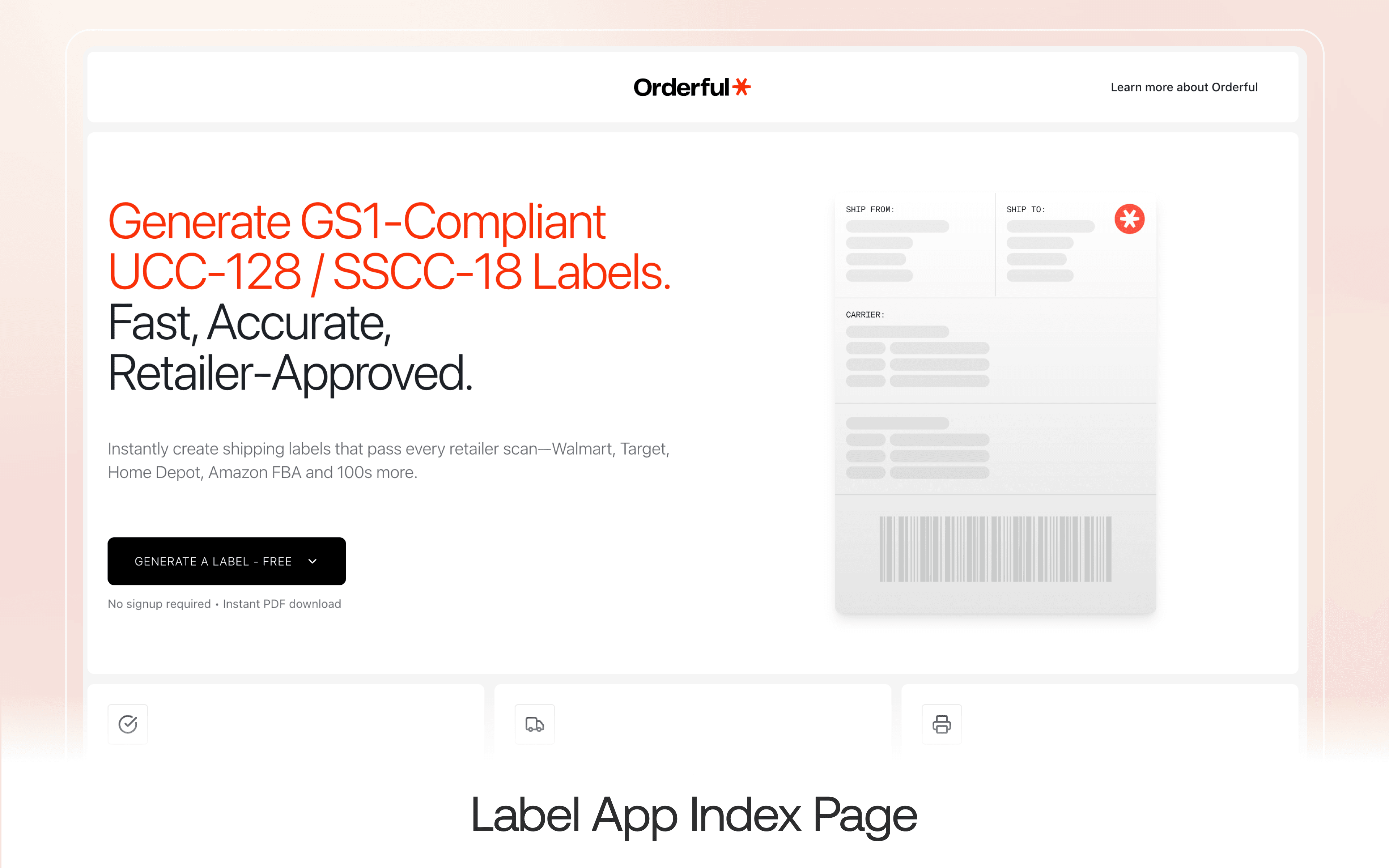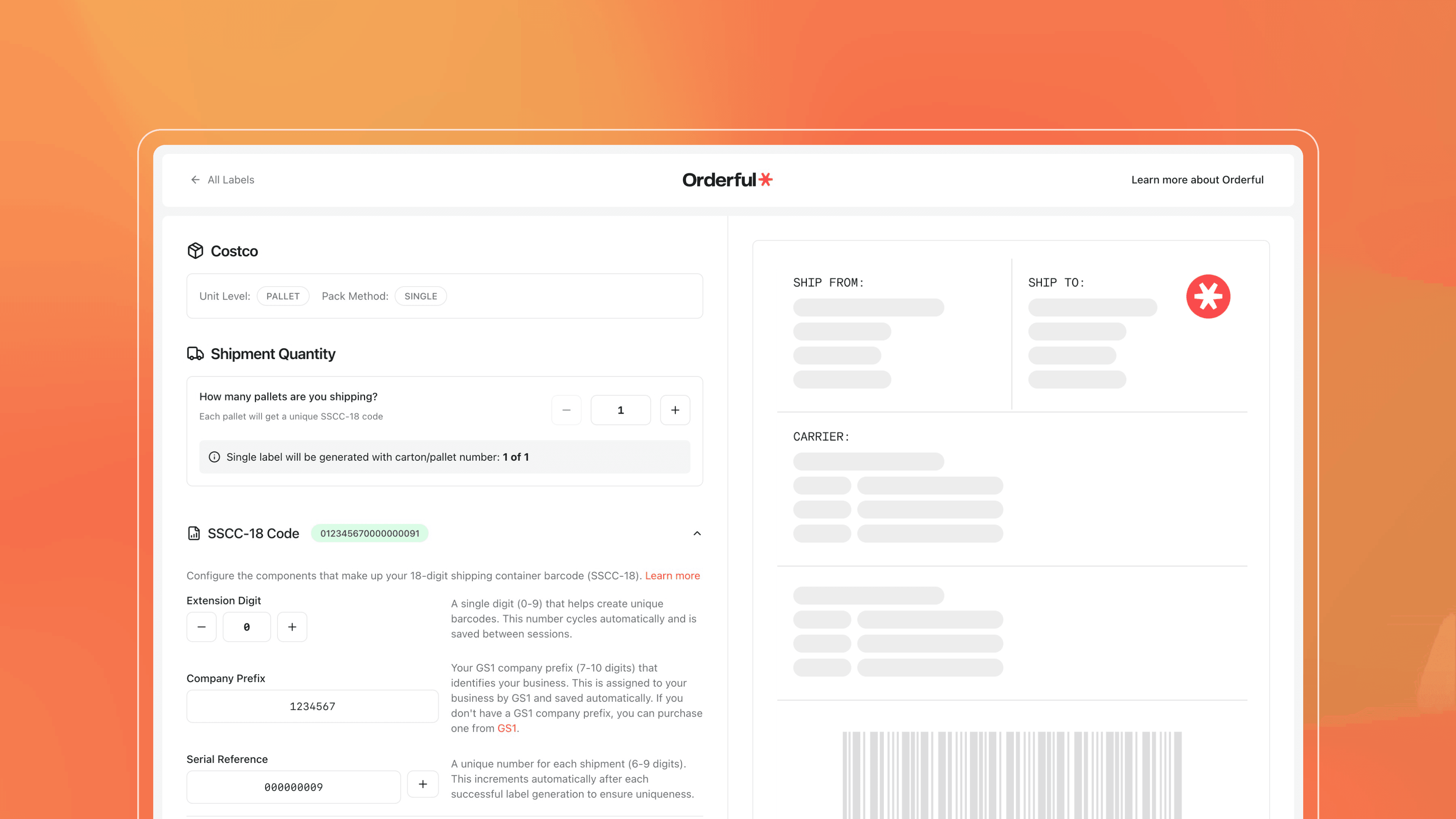
In July 2025, leveraging the rise of AI assisted development / vibe coding, we identified an opportunity to transform Orderful's internal GS1 Label API into a public growth engine. Recognizing high SEO demand for GS1 compliant labels, I designed, developed, and shipped a standalone label generator.
The GS1 Label Creator has since evolved into a lead generation engine by solving a complex logistics pain for suppliers. The label app has generated over $50k in pipeline and closed a $20k deal within 90 days all while bypassing traditional development cycles.
Visit Live App ↗
- - Senior Product Designer
- - Design Engineer (AI Assisted)
The Challenge
The Challenge
What difference did we make?
+
Some context
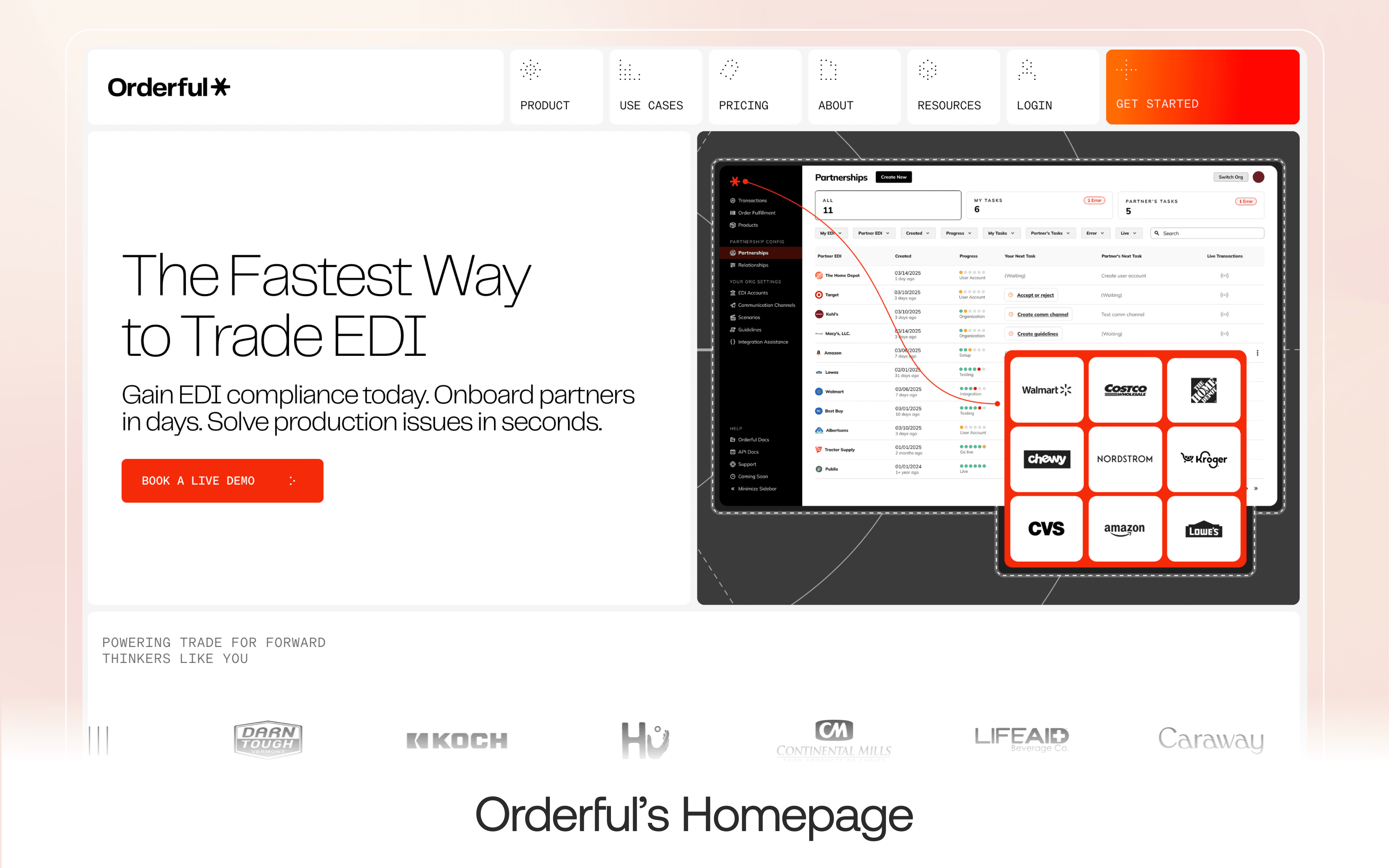
A little bit about Orderful
Orderful is a cloud based Electronic Data Interchange (EDI) platform that enables companies to exchange complex business documents (like Purchase Orders and Invoices) with their trading partners in real time. By abstracting away the complexity of traditional EDI, Orderful ensures data compliance and accuracy, allowing suppliers and retailers to seamlessly manage their commerce operations and scale their businesses without costly manual intervention.
GS1-128 Labels
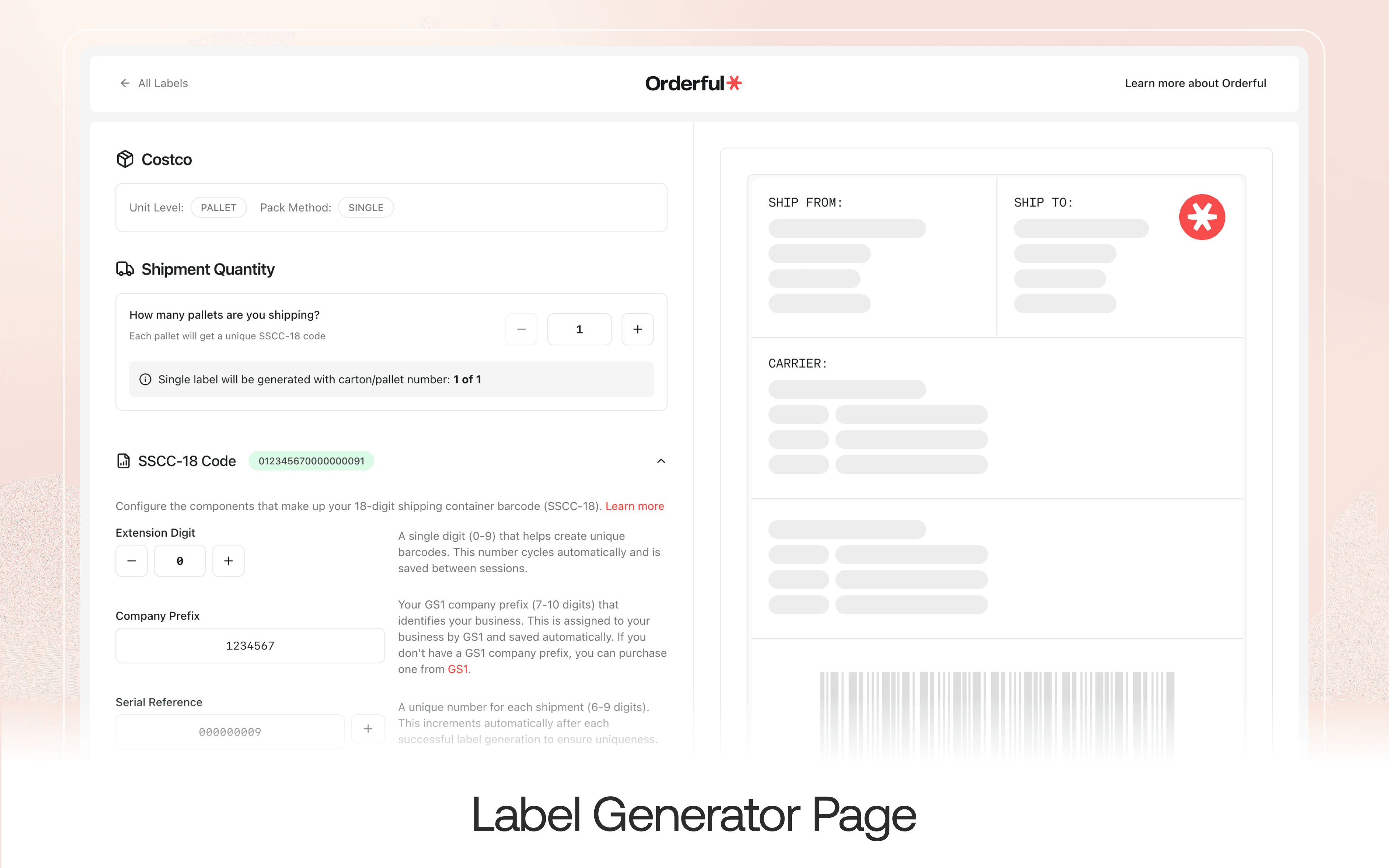
GS1-128 labels are essential logistical identifiers used globally by suppliers to communicate shipment contents to their retail partners (such as Walmart and Amazon). Retailers rely on the machine readable SSCC 18 barcode on these labels to quickly scan and process incoming inventory at their distribution centers. Each retailer has their own unique requirements and layouts for their label. If the label is non compliant or the barcode is inaccurate, the retailer rejects the shipment or issues expensive chargebacks, making label accuracy a high stakes, mandatory requirement for every supplier.
SSCC-18 Barcode Requirements ↗
The Build
Rapid prototyping with AI
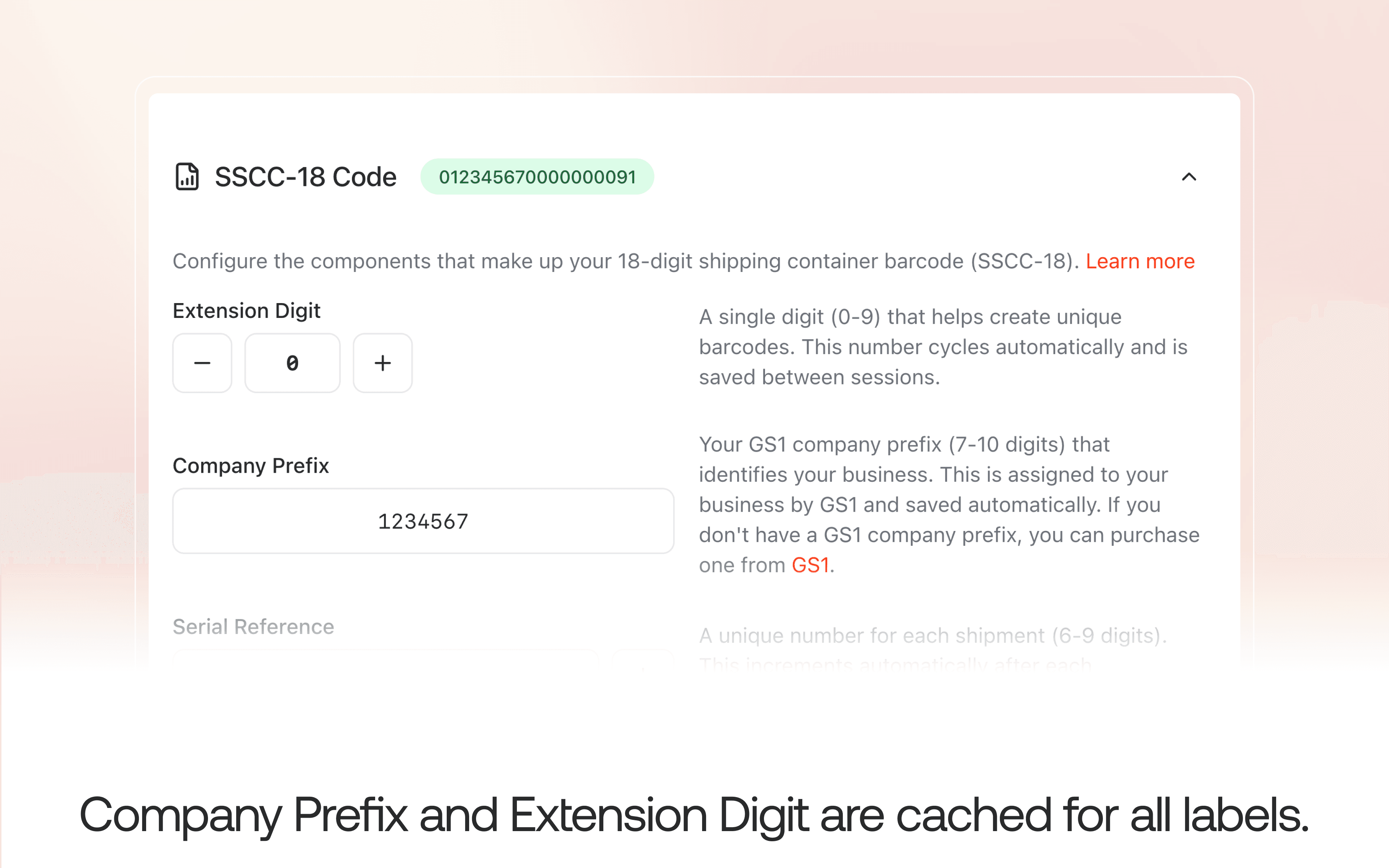
I kicked things off using Cursor to rapidly scaffold a Next.js serverless application, exploring whether "vibe coding" could handle the complexity of logistics workflows. I prompted AI to interpret GS1’s technical standards and build a SSCC-18 barcode generator. The AI not only parsed the requirements but also surfaced an NPM package for compliant barcode rendering, proving the AI-assisted approach could be built upon.
Turning Documentation into Backend Logic
For the label templates, I needed to support strict schemas for over 150 retailers. Rather than coding each field manually, I leveraged an existing spreadsheet used for API integrations by our implementation team.
I fed this spreadsheet into the prompt, which allowed me to programmatically generate the form requirements and field validation for every retailer. This turned a static document into a dynamic backend logic layer in minutes rather than weeks.
Seamless API Integration
With the frontend generator ready, I used Cursor to scan Orderful's public API documentation. The AI agent mapped the frontend inputs to our API endpoints with near perfect accuracy. This allowed me to move from a "dummy" generator to a live, functional tool that could generate unlimited real labels via our production API.
Adapting to supplier workflows
Demoing the single-label POC surfaced a big supplier need, batch label generation. High-volume suppliers needed to produce sequential sets, not just one label. I returned to the code, prompting to utilize our API's batch capabilities. I modified the generator to accept bulk ranges eliminating a high-friction blocker task for suppliers.
Programmatic SEO for retailer searches
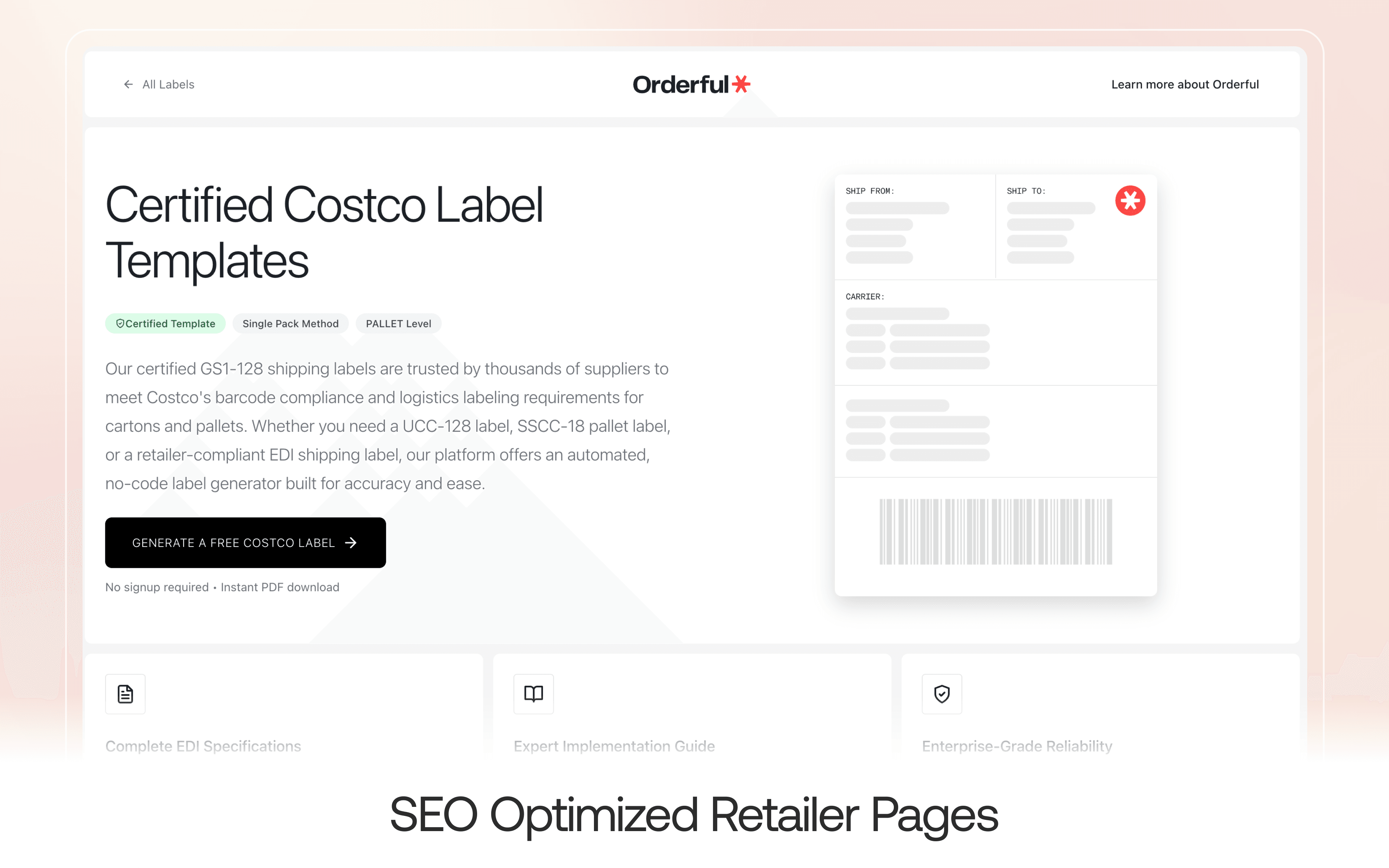
Marketing identified that users weren't searching for "GS1 Generators" generically, they were searching for "Walmart Shipping Label" or "Costco Barcode." early on. To capture this traffic, I wrote a script to iterate through our retailer templates and generate static, SEO optimized landing pages for every specific retailer (e.g., /labels/walmart, /labels/target). This created hundreds of backlinks for search traffic.
Design Details
Matching Orderful's Brand
I created a prompt that resulted in a simplified "bento box" layout that our marketing team used for our external branding. This modern, modular structure visually aligned the generator with Orderful's main marketing website, ensuring a cohesive brand experience.